CARDIO VERSUS CONDITIONING


Warning: This one is a pretty dry read, but it clears up what I see as a fundamental misunderstanding among trainees.

Anyone that follows my writing knows that I am big on the correct usage of specific language.  Many claim that what I argue are simple semantics, when the reality is that incorrect language breeds misunderstanding, which results in stagnation and eventually decline in a trainee.  It is due to this that I feel it is necessary for me to establish the difference between cardio and conditioning as I understand them, in terms of both what they are and how they are used.

CARDIO
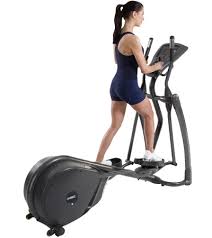

"Cardio", when used as a verb, refers to the act of intentionally elevating one's heart rate through exercise for the purpose of improving their cardiovascular system.  It functions in language in a manner similar to "strength training".  There are various methods employed to accomplish this goal, to include jogging, walking, swimming, cycling, boxing, etc.  What movement one uses to get there isn't the concern, simply that one is able to get their heart pumping.

When used as a noun, cardio takes on a far more all encompassing meaning.  Whenever someone is physically exhausted from a task, they claim to need to work on their cardio.  When someone displays great endurance at a task, their superior cardio is applauded.  It is one of the first (and many times ONLY) answers given toward fat loss, and one of those things that HAS to be a part of every program.

It is here that the confusion starts and leads to poor training decision.  What many consider "cardio" the noun here is in fact conditioning.  Conditioning, as a noun, would mean the ability the engage in a specific activity for longer periods of time, along with be able to recover between training sessions from this activity.  For the discussion on lifting, it would mean your ability to recover between sets, in terms of both the time it takes to do so and how fully you are recovered.  Extrapolate this to other sports as applicable.  Running conditioning would make you able to run longer and recover better from runs, boxing conditioning means lasting for longer rounds, etc.
How could this confusion exist?  It's due to the fact that there is a presupposed direct carryover from any type of cardiovascular training to your "endurance".  This is because of a false notion that endurance is some sort of general quality an athlete possess, when in reality, it is very much dependent on the activity being performed.  The reality is, even if your cardiovascular system is very healthy and capable, it's ability to influence your training is limited to the ability of the rest of the systems involved in your activity.  If the local muscular endurance of the muscles involved in your activity is shit, your body will quit well before your heart, but the impact is still the same to the outside observer; you "gassed out".


CONDITIONING


This is why it becomes vital to employ "conditioning", the verb.  Though conditioning may have a similar impact to the cardiovascular system as "cardio" does, the reason why it has such a substantial benefit.  Whereas movement selection was inconsequential when it came to cardio, it is crucial when it comes to conditioning.  When one engages in conditioning, they utilize a movement that mimics the overall goal of the trainee or utilizes similar muscle groups.

As an example, for an aspiring powerlifter, sled drags, car pushes, kettlebell swings, prowler work, tire flips, etc, would all be great choices for conditioning.  They all heavily utilize the posterior chain, and many movements mimic the explosion or hip hinge found in the squat or deadlift.  They develop the local muscular endurance of the necessary muscles and also improve the cardiovascular system, effectively contributing to one's "endurance".  One of the other benefits of these specific selections is that they are concentric only, which means that your conditioning work is going to have limited negative impact on your recovery between workouts, as the eccentric is what is primarily responsible for muscle soreness.

With this understanding of the two terms, one understands how there is definitely a possibility for overlap of the two terms.  One can engage in cardio that is also conditioning work for a sport, with a runner going on a run being an obvious example.  One can also perform conditioning work that has a cardiovascular benefit, with the prowler being a great way to elevate your heart rate.  The difference exists in the intent of the trainee.  If you are trying to improve your endurance as it applied to lifting and go for a run, you've pretty much failed.   This is why the concise usage of proper language becomes imperative to improve performance, and why it's also vital for one to get their mentality correct regarding their training and goals to be able to make the correct decisions on what to implement.

LEG PRESSING NOTES: Form, Foot placement and Stance. By Vic Goyaram

 Leg pressing notes: 
Form, Foot placement and Stance 
Researched and composed by Vic Goyaram
Leg press form
The leg press is a good exercise for the legs. It is a great adjunct to exercises like squats and lunges. There is less back involvement, allowing you to focus more on your legs.   The leg press lends itself well to intensity techniques like drop sets and rest pause. However, it is it more often than not made to be an ego exercise because one can really move some serious poundage on the leg press. You can easily impress yourself on the leg press because of the number of pounds you can pile on this machine. 

A. Leg press 500+kg but can squat only 60kg
Very often you will read or hear about somebody claiming a 500kg+ leg press. His legs may or may not match these poundages (more often it is the latter case). Secondly, you  may also see someone "leg press" 500kgs but can only half-squat 60kg (with an added 100kg of excuses, if he ever squats at all). I have put the leg press between inverted commas because their technique is not that of a leg press. 

B. Pressing only for a few millimetres, with assistance from two hands and two spotters
I am sure everyone has seen beginners and intermediates load up the leg press machine with heavy weights and move down only an inch. Sometimes you don't really see any movement in the legs but rather movement in their elbow joints. why? Because they are also pressing on their knees with their hands and two other persons helping. This is not called leg pressing. It is not even an exercise and we still have to come up with a name for this movement. 

C. Ass off the bench
Finally, you will also see people using an "overzealous" range of motion. Meaning, they will allow their butts to lift off the seat on the way down. This is potentially dangerous to the lower back. Do not do this. It does not equal more growth. 
Proper form: knees move to the chest, butts do not lift from the seat. 
Hands to the side and only on rare occasions can be used for assistance.
Photo courtesy: Dylan Ridley, South African elite bodybuilder
The Regular Leg pressing stance
The "normal"  stance for the leg press consists of the feet placed at a shoulder width and in the middle of the platform. The leg press appears to not be too versatile but this isn't true. As you will see below there are many variations, each with a different effect. You can create variations by placing your feet at different positions on the pressing platform.  Keep in mind that leg press machine designs differ a lot and some machine have large pressing platforms while others are quite small and does not allow for too many variations in foot placement.
As we will see later. Placing the feet at different heights on the leg press
platform impacts on the level of quadriceps and hamstring involvement
Feet high v/s feet low
------------------------------------
Some machines with large platforms allow you to safely place the feet higher up. This recruits the glutes and hamstring muscles to a greater extent in addition to quadriceps. However, placing the feet lower down recruits more quadriceps. Experiment to see to which extent you can SAFELY use these two variations, depending on the size of your leg press machine platform.
Leg pressing with feet higher up on the platform (if the platform is wide enough to safely allow it) brings the hamstrings and glutes into play more.
Personally, I have a sciatic nerve impingement. The pain is very very mild but I use it as a training aid, in a "blessing in disguise fashion": it gives me hints about my form in several exercises and tells me to what extent my lower back skeletal system is starting to take stress through the pain signals that it sends me. Placing the feet relatively low on the leg press platform takes my lower back out of the equation. It can also tell you that putting the feet too high also puts a bit of stress on your lower back. From experience I have also seen that taller people prefer placing their feet high up the platform.
Proceed with caution. Women like this variation because it works the glutes
quite well. But safety is key here. You don't want you feet to slip.
Note that the knees are in line with the ankles in the bottom position
This variation works the quadriceps more than the hamstrings
Keep are kept fairly low on the platform.
Foot stances (Wide v/s Narrow)
-----------------------------------------------------
Secondly, adopting a wider than shoulder width stance recruits the inner thigh muscles like the adductor and the glutes, giving more inner development to the legs, a great contributor to overall leg size. It is common belief that keeping feet together works the outer sweep (vastus lateralis) but there is no scientific proof that this is true.
Performing leg press with a rather wide stance stresses the
inner leg muscles as well.
Reference:
Escamilla RF, Fleisig GS, Zheng N, et al. Effects of technique variations on knee biomechanics during the squat and leg press. Med Sci Sports Exerc 2001 Sep; 33(9) :1552-66.

________________________________________________________________________________
©,2013, Veeraj Goyaram, Bodybuilding Mauritius. Any reprinting in any type of media is prohibited.

Disclaimer:
The Content on this site is intended to be used for educational and entertainment purposes only. It is not intended to be and should not be interpreted as medical advice or a diagnosis of any health or fitness problem, condition or disease; or a recommendation for a specific test, doctor, care provider, procedure, treatment plan, product, or course of action. BODYBUILDING MAURITIUS is not a medical or healthcare provider and your use of this site does not create a doctor / patient relationship. We disclaim all responsibility for the professional qualifications and licensing of, and services provided by, any physician or other health providers posting on or otherwise referred to on this Site and/or any Third Party Site. Never disregard the medical advice of your physician or health professional, or delay in seeking such advice, because of something you read on this Site. We offer this Site AS IS and without any warranties.  Qualifications of author of article: Bachelor of Science (Honours) in Biology (Department of Biosciences, University of Mauritius) and Master of Science in Medicine by research in Exercise Molecular Biology (Research Unit for Exercise Science and Sports Medicine, University of Cape Town). Correspondence: vicgoyaram@gmail.com
________________________________________________________________________________

WHAT'S MY MOTIVATION?


Do you have a video that gets you amped to go to the gym?  A go to music track you gotta blast before you walk in the doors?  A pre-workout concoction that is guaranteed to make you want to smash some weights?

Why?


"I thought it seemed obvious"

Is training such a miserable experience that you need to psyche yourself up to do it?  Is the reward of being stronger and better not enough motivation?  Is getting you to the gym like getting a kid to eat their veggies, requiring many gimmicks and theatrics?

I'm not here to judge, simply to wonder.  I cannot pretend to understand your experience or perspective, but instead just offer up my own.  I don't like to train.  It's not something I would willingly do.  If given the choice between training and a hot dog eating contest, the hot dogs win every time.


Pictured: My Id

Why do I train then?  Because I want to be strong.  It is the thing I live for.  My first coherent memories as a child are of wanting to be strong.  I grew up hearing stories of men with great strength overcoming adversity and fighting off monsters, watched movies where a strong man was able to fight off many attackers and accomplish great feats, and played games where I could be the strongest being possible.  If I had 3 wishes, I'd wish to be the strongest being to ever exist 3 times.  It's what I want.

I have a goal, and this goal IS the motivation.  Training is the method, and I employ it to reach my goal.  If I need motivation to train, it means I have picked the wrong goal.  You have to want this bad enough that you are willing to suffer the adversity necessary to obtain it.  If the goal isn't worthy enough, it's simply going to be a chore.

This is why concrete goals are necessary for training.  New Year's resolutions folks that just want to "get in shape" fade away, because there is nothing to chase.  If "being in shape" really was your life's purpose, you wouldn't be out of shape in the first place, so it's clearly not a high priority.

Now, is my goal of simply "being strong" are clearly defined goal?  No, but it is a driving force and motivating factor.  Instead, I have picked a concrete goal that, in obtaining, will make me strong.  For me personally, I want to deadlift 800lbs.  If I can do this, I will have reached a level of strength that I consider "inhuman".  That said, I imagine that once I accomplish this, I will still not feel that I have become "strong", and will set another absurd goal.


"Mind if I work in?"

Powerlifting is also beneficial in this capacity.  When I have a meet on the horizon, I am in very good shape.  At my most recent meet, I was walking around with a full set of abs.  Without a meet in my future, I have allowed myself to get soft.  Being honest with myself, I don't want abs bad enough to do what it takes to always have them, but when I have the opportunity to crush records, I will do what it takes, which means eating nothing but ground beef and mixed veggies and passing up the pizza and desserts whenever they are offered to me.  And every time I passed up eating something delicious, I told myself "this is what a record breaking total tastes like".  That, in and of itself, was enough to keep me going.

Is it for you?

TOUCH AND GO DEADLIFT SPECIAL

I have written a lot on touch and go deadlifts in the past.  This will be a compilation of those thoughts/posts.

(For those unaware, I only train my deadlifting touch and go.  I picked up this style after a massive back injury prevented me from deadlifting for over 3 years, and this was the only painfree way I could return to training.)


All Deadlifts Should be Touch and Go

Hear me out first
“A deadlift starts from a dead stop on the floor.  That’s why it’s called a deadlift.  If you don’t pause on the floor, it’s not a deadlift.”

I will agree with that, purely because I am a semantic asshole.  That said, it’s a terrible reason to choose how you do an exercise.  Anyone who has done a deadlift knows that breaking off the floor tends to be more the most stressful portion of the lift, even if you are strong off the floor.  Breaking a very heavy weight off the floor is taxing.  Doing it multiple times in a workout is very taxing.  Doing this multiple times a week/month in turn is incredibly taxing.  In many cases, it makes recovery between workouts difficult without excessive eating/sleeping (which I am very much in favor of, but also realize that many have lifestyle that will not support this/don’t want to get excessively fat).

The touch and go style ensures that you break off the floor significantly less in a workout (I’ll still break off the floor at least twice, once for the initial, and one more time after the first put down to see how many more reps I can eek out), making the entire process less taxing.  Additionally, many make the argument that dead stop deadlifts are more analogous to a competition deadlift, since you only do one rep in competition.  I argue that with this logic, the touch and go is actually a better tool for training for a heavy single.  Anyone that has ever seen or taken part in a grinder deadlift has see the common 7-8 second agonizing single.  When you perform deadstop deadlifts with a weight you can do for 5 reps (for the sake of argument), none of these reps are going to last longer than 1-2 seconds, and thus your body learns how to strain for this long when it comes to deadlifting.  When placed in a situation where it needs to take 7 seconds to get from floor to lockout, it is in foreign territory.  When you perform a touch and go set for the same amount of reps, you in turn are maintaining tension for 5-10 seconds, meaning that your body is able to handle this sort of tension and knows how to remain tight.  Though the weight you will be using during the deadlift will be heavier in competition compared to your touch and go training lifts (which can be remedied with ROM progression training, which I have addressed here http://mythicalstrength.blogspot.com/2012/12/range-of-motion-rom-progression.html), the time you are straining will be equal.

Though some may make the counter argument that dead stop deads get you stronger since you get better at breaking off the floor, and anything you can break off the floor for a working set you can definitely do in competition, I would argue that since touch and go deads are less taxing and make it easier to recover between training, your strength will increase at a faster rate (due to less needed deloads/resets/time off), and you will either at least meet or surpass the deadstop crowd, and be less burnt out/injury prone as you do.  With breaking off the floor being the most stressful and taxing part of the lift, it is going to be the part most prone to causing injury as you fatigue toward the end of the set and experienced form deviation.
Additionally, use straps with touch and go.  The bar is going to be off the floor for a LONG time, don’t let your grip ruin your workout.

Weak From The Floor

A question that was asked of me about touch and gos, and my answer.

"Sort of an intro question here, but have you ever found that you're weak off the floor?"


So your question actually ties into a rant I've had before. I will attempt to be succinct but make no promises.


Did I mention my education is in politics?

Short answer: No.

I don't believe there is such a thing as "weak off the floor" for a raw lifter. It logically makes no sense, as the floor by definition is the hardest part of the lift for a raw lifter, much like how off the chest is the hardest part of the lift for a raw bencher. In my deadlift training, anything I can get off the floor, I can lockout, because I have accomplished the hardest part of the lift at the beginning and now simply have to complete the lift. If I cannot break the weight off the floor, I am not "weak off the floor", I am simply weak. Once I get strong enough to be able to break a weight off of the floor, I will be strong enough to deadlift it.

Now at the same time, I do recognize the limitations of touch and go deads in that there is not as much practice in breaking weight off the floor compared to deadstop reps. This is why, in my training, I break the weight off the floor twice in a set. I do as many reps as I can in one go, set the bar down, rest, and then repeat for one more set. Not only is this more practice, but additionally it's practice in breaking weight off the floor in a fatigued state, which bears a similar benefit to breaking all of your reps off the floor, but at the same time allows for a significantly higher weight to be utilized compared to a pure dead stop set.

To put in perspective, I recently did a touch and go set of 5 reps of 590. I managed to do 4 reps before I had to put the bar down, rested for about 90 seconds, and then did one more rep. Realistically, if I were to do a deadstop set of 590, I most likely would've been able to manage 2 reps. Maybe a triple. I essentially broke the exact same amount of reps off the ground, but got WAY more time under tension with the former over the latter.

But lets be real and acknowledge that, even in the raw training world, there are guys who are very fast off the floor and struggle at lockout (I won't name names, as I don't want it to be construed that I am in any way "calling people out".  I respect these guys, because that's pretty crazy).  What ultimately is the benefit of being fast off the ground in a training perspective?  Being "strong off the floor" by definition means you are also "weak at lockout", as you can't simply be "strong all over".


I suppose there are exceptions

With this acknowledgement, one also realizes that, in the realm of missed training lifts, the percentage increases significantly with one who is weak at lockout versus weak off the floor.  When you are weak off the floor and go to pull a weight you cannot handle, the lift is missed before it starts.  The weight is welded to the floor and not going anywhere.  In terms of energy/time invested and impact to your recovery, it's going to be minimal.  You also aren't going to be grooving much of anything into your motor pathway, as you simply aren't moving. 

The alternative is not the same.  When you are strong off the floor, you can very much pull a weight off the floor that you are not capable of locking out, which you won't discover UNTIL it's time to lock it out.  This is going to be far more energy and time invested in a failed lift, which will in turn impact your recovery as well.  You will have to keep in mind that this is entirely theorycraft for me, as I have never had the issue of being strong off the floor, and it may perhaps be the case that someone who has this attribute can indicate from their warm ups what can be accomplished in that training session, but this is what I see as being a potential issue.

MORE THOUGHTS

-If you want to lose weight or stay on a diet, only use a hand basket when you shop.  You will prioritize high value stuff like meat and veggies over chips and snacks, as the latter takes up way more space compared to how much value it provides.  Also, gallons of milk and pounds of meat tend to smash squishy stuff like bread and twinkies, and will crush your chips.  This also ensures that you eat fresh food and nothing goes to waste, since you will only be able to carry a week's worth of food.  To really drive the experience home, walk to the grocery store instead of drive if you can.

-When you start a new program, pick assistance work that is easy to go heavy (bar weight) on.  Your primary work sets will be light, so you can handle heavier assistance work.  It should auto-regulate such that, when the primary sets get heavy, you stall on assistance work and have to change movements.  Pick something where bar weight is light due to other variables (bands, chains, fat gripz, angles, etc).

-A deadlift is just a weighted hinge.  You should move like one of those mechanical drinking birds.


Seen here
If you feel something contracting, you need to get tighter.  Once you get your whole body tight, it's just grip and hinge.

-This has been my conditioning work as of recently.  10 KB swings-5 dips-5 chin ups.  As many rounds as you can do in 15 minutes.  Real ass kicker, and hits just about everything.

-I haven't locked out a rep since my meet 4 months ago.  I have also put on 20lbs and my joint pain is gone. Coincidence?

-Doing a long set of band pull aparts/pushdowns?  When you reach failure, let your hands drift a little out toward the ends of the band.  Its effectively a drop set.  The less you let your hands drift, the longer the set can go on.

-Are there any 600lb raw squatters running smolov?  I really want to know.

-I am getting to the point where I can't even read about programming anymore.  As cool, unique and nifty everything seems, it's all just lifting weights.

-I am going to be training in commercial gym for an extended period of time due to an upcoming move.  Rather than give up my deadlift mats, I am going to cut 7 of them in half to make "mini-mats" that I can carry in a gym bag.  When there is a will, there is a way.

-My gym hasn't had a mirror in 5 years.  My form is the best it's ever been.  If you are checking your form in the mirror, you are lying to yourself.  Go by feel.

-If one day of bad sleep or one missed meal impacts your training, you have deeper issues that you need to address.

-Almost every deadlift problem can be solved by two things.  1: Bring your feet in.  2: Lose fat.

-Things I don't know how I lived without them.  13mm belt.  Ironmind straps.  Meadows row handle w/landmine.  Texas Deadlift Bar.  GHR.  Reverse Hyper.  Safety Squat Bar.

-If you aren't doing conditioning because you don't know how to do it, you are making excuses.  Do SOMETHING.  Play a sport, go for a walk, drag something heavy, do some yardwork, just be active.  

-People that say they prefer chalk to straps are missing the point.

-Stop looking at movements in terms of pros and cons against each other and just ask if they help meet your goals.  If they do, use them.  If you can't use them now, wait until you stall, and then use them.

RANT VIDEO: OVERTHINKING

Done by request.  Video speaks for itself.


Qualifications in fitness for Mauritians. By Vic Goyaram

Qualifications in Exercise and Nutrition for Mauritians
Researched and composed by Vic Goyaram

Fitness qualifications
I decided to write this article after having received several queries from friends in Mauritius about fitness qualifications that they can obtain. To my knowledge there isn't any institution offering courses yet in Mauritius. I am sure there will be in the future given the growing interest in fitness education and the number of qualified and experienced people. We need more qualified professionals in Mauritius because we need to reach out to the maximum people, not only those in bodybuilding. 

I am putting together whatever I know about courses and qualifications in this article. It has been many years that I haven't been in Mauritius and if there has been any change, please feel free to add your own input.  Although I am writing this article from a Mauritian perspective, many readers from other countries may also benefit. Rest assured that there is something for everyone, irrespective of educational background. 

How can qualifications help you?
First of all, let it be clear that having qualifications does not qualify you automatically to be an expert. We have all known people who can be classified as follows:
  • People who flaunt their qualifications but whose level of knowledge is rather low. There are lots of personal trainers who don't even look like they are into any form of exercise, let alone lift. 
  • People who do not have any qualification but whose genuine interest for learning and long experience in the field really shows in how much they know in the field.  
  • People who have no interest in the fitness world but who view fitness-related jobs as a way to make quick money and one good day decide to pursue a personal training course. A couple of weeks down the line you will see them teach the wrong things in gyms.
I have personally learned a lot from people whose qualifications I didn't care to look up. From their knowledge it is evident that they know a lot from experience, continuing study and open-mindedness to consider new ideas. Knowledge is constantly accumulating, more new things are becoming known and a lot of old ideas and beliefs are being disproved.  Therefore, we must be flexible enough.  

Qualifications can help you in the following ways:
  • If you want to become a personal trainer, advisor, PE teacher or have a gym and want to give better coaching to others.
  • If you are an athlete and want to increase your knowledge on sports training and nutrition that can give you an edge.
Routes to qualifications

1. The academic-formal education route

There are two ways to go about with this one. The first way is as follows:

Specialised degrees
Doing an undergraduate degree in the field of Biology, Biochemistry, Nutrition, Physiology and allied disciplines. After this degree you can either go into other professions (industry, teaching etc) but this qualifies you to a number of certifications that you can pursue which require that you have a degree in the above disciplines. I will tell you more about these later.

Courses at the University of Mauritius
The University of Mauritius offers good quality undergraduate courses in disciplines that prepare you for sports/ exercise related fields. Undergraduate education at the University of Mauritius is very good. Don't let anyone tell you that their degree is not good. The one who discourages you from studying a field you are passionate about deserves a slap.

There may be shortcomings at the postgraduate level in certain fields but undergraduate education at UoM is very good. A lot of UoM graduates remain unemployed in Mauritius but once they decide to let go of mommy and daddy's house and stand on their own feet abroad they will see the edge their UoM degree gives them. Even if foreign universities may require you to do equivalence exams you will be better than most students abroad. The following are the qualifications from the University of Mauritius that I have short-listed.

1. The Diploma in Sports Science & Recreational Activities. click for details

2. The BSc (Hons) Physiotherapy: Physiotherapists are key people in sports. Respect to physiotherapists. They are also trained to help children and elderly as their training is not sports-specific. I have a friend who is the physiotherapist for the South African Canoeing national team. She is very good and has a gratifying career. More details on the UoM BSc (Hons) Physiotherapy course click here

3. The BSc (Hons) Biology: This is the degree that I did with UoM 12 years ago. It is an excellent degree with the curriculum encompassing all aspects of living systems and the environment. With respect to our field you will be adequately trained in biochemistry, cellular biology, physiology as well as plants of pharmaceutical importance. With this degree in your pocket you will be equipped to go into any field dealing with living things.  For my final year I did my research project on human nutrition (mineral bio-availability). I was also able to do mini-research projects on plant antioxidant biochemistry. Personally speaking, this qualification helped me obtain employment in the field of Agriculture, horticulture, plant pathology and medical diagnostics before I undertook exercise biology as my future career course. Every single thing that I have learned from my degree has helped me subsequently. Click here for more details

4. Specialised Physiology/ Biochemistry/ Nutrition/ Food Science degrees: If you decide to be a specialist from undergraduate level itself then you need to fly abroad to study. There are many options in the UK, the Americas, Australia and other European countries but not everybody has the money to go to such countries. An excellent foreign study option remains India. There are many good universities in India that you can afford with more or less the same amount of money you'd spend for a degree in Mauritius. There are also South African universities that rank among the world's finest but the downside is that they are quite expensive, although not as expensive as Europe/ US/ Canada/ Australia. An undergraduate degree may cost about Rs. 1.5 million. I recommend the following universities in South Africa:


Some can take it further and go on higher degrees. The job prospects are numerous provided one is versatile. University Lecturer/ researcher in exercise science, formulations R&D scientists for supplement companies, scientific writer for magazines, scientific coaches. It takes so much time and massive efforts that sometimes it pains and you have to be really passionate about it or else don’t do it. It is really tough. You may need to spend 10 years at a university to reach this level and spend a boatload of money and undergo sacrifice. This is especially true if you choose to be independent or do not come from a family who has money. Ask me about it. 

For people having degrees in other fields
If you are pursuing a degree in other fields (commerce, accounting, engineering etc) and are interested in getting a training/nutrition certification then it is possible as there are many reliable ones that you can acquire that do not require a specialised degree. You will learn more about these below.

2. Online Accreditations
You have to be very careful with online course providers. There are many scam artists on the Internet offering one-day fitness certifications. In my opinion, one of the best online course provider is the International Sports Science Organisation (ISSA).  It is based in the USA among it's panellists are Dr. Sal Arria, Dr. Fred Hatfield, Dr. Thomas D. Fahey, Dr. John Berardi, Dr. William J. Kraemer as well as highly knowledgeable bodybuilding legends like Bill Pearl and John DeFendis. I have helped friends obtain their ISSA qualifications, especially their nutrition certification. 

The ISSA offer training and nutrition certifications and it is not difficult to pass exams provided you put the effort in. With an SC certificate these courses can be done from Mauritius itself. For more information:
Click here to visit the ISSA website
2. Professional Certifications

a. The International Society of Sports Nutrition (ISSN)  
Click here to visit the ISSN website
The ISSN was founded by Dr. Jose Antonio, Dr. Richard Kreider, Dr. Susan Kleiner, Dr. Doug Kalman and Anthony Almada. It is a non-profit and academically-based society for the promotion of sports nutrition and applied nutrition. The ISSN is recognized by leading organisations and universities worldwide and also has a scientific journal where research and reviews are published by researchers worldwide. ISSN is the real deal. 

The ISSN offers two main sports nutrition certifications, namely the:
  • The Sports Nutrition Specialist (SNS): If you have an HSC and are above 18 you can do the SNS.  You require a knowledge of basic exercise training, general nutrition and sports supplements. If you are in Mauritius you will need to get a Biology/ Health professor at a university invigilate you while you write the exams at a pre-determined time.  The SNS is definitely worth the investment. For more details about the SNS click here. (Yo! I didn't mean "lick" but click)
  • The Certified Sports Nutritionist (CISSN): If you have a master’s degree or a 4-yr undergraduate degree in the related disciplines you can do this. If you have a degree in an unrelated field there are some conditions that should be met.  You must get a professor to invigilate you for the exams or you can take the exams in America at the ISSN conference (expenive). For more details on the CISSN credential and how to obtain it please click here to find out more
b. National Strength and Conditioning Association (NSCA)
Click here to visit the NSCA website
When it comes to training certifications honestly I don't know better than the US-based NSCA which has been founded in 1978. The NSCA bridges the gap between science and its application and its certifications are the most sought-after in the industry. NSCA certifications are also recognised worldwide. The famous Journal of Strength and Conditioning research (JSCR) is published by the NSCA.

Below are the major certification courses offered by the NSCA:

The NSCA-CPT (Certified Personal Trainer)
To become an NSCA-CPT you will need HSC plus some experience in training. You will have to take an intensive exam at an examination centre. The closest for Mauritius is South Africa. The NSCA qualifies CPT specialists as follows:


"Health/fitness professionals who, using an individualized approach, assess, motivate, educate and train clients regarding their health and fitness needs. They design safe and effective exercise programs, provide the guidance to help clients achieve their personal health/fitness goals and respond appropriately in emergency situations. Recognizing their own area of expertise, personal trainers refer clients to other health care professionals when appropriate". More details here.


The NSCA-CSCS (Certified Strength and Conditioning Specialist)
This uses a more scientific approach to training and coaching. It requires a post-secondary qualification. Exams are held abroad. South Africa is the option for Mauritians. A lot of professionals have it. The NSCA qualifies CSCS specialists as follows:


"Professionals who apply scientific knowledge to train athletes for the primary goal of improving athletic performance. They conduct sport-specific testing sessions, design and implement safe and effective strength training and conditioning programs and provide guidance regarding nutrition and injury prevention. Recognizing that their area of expertise is separate and distinct, CSCSs consult with and refer athletes to other professionals when appropriate". More about the CSCS certification". More details here


The NSCA-CSPS (Certified Special Populations Specialist)

People with special needs like those with disabilities or medical conditions can also benefit from exercise. Special populations specialists are well equipped to attend to these people. The NSCA qualifies CSPS specialists as follows:


"fitness professionals who, using an individualized approach, assess, motivate, educate, and train special population clients of all ages regarding their health and fitness needs, preventively, and in collaboration with healthcare professionals. Special populations include those with chronic and temporary health conditions. CSPSs design safe and effective exercise programs, provide the guidance to help clients achieve their personal health/fitness goals, and recognize and respond to emergency situations. Recognizing their own areas of expertise, CSPSs receive referrals from and refer clients to other healthcare providers as appropriate". More details here.


Feel free to write to me if you need any guidance about the fields of study to choose. Also chat with others who are experienced in this field. My email address is vicgoyaram@gmail.com.  It takes a lot of sacrifice to get these qualifications but at the end of the day it is worth it. There is no easy way out. You have to sacrifice to gain. 

Related Posts Plugin for WordPress, Blogger...